Title: Klanglinien en soleil majeur, Hommage à W.
Instrument: audio installations
Duration: undefined
Year of composition: 2005
Property, publisher: author
First performance: Gigondas, Cheminement des sculptures, December 2004-November 2005
Other information: audio installations in collaboration with Johannes Pfeiffer:
1 - Chiesa (Una musica lunga una notte). Church (one night-long music)
2 - Arpe (muri dritti e storti), Harps (straight and crooked walls)
3 - Steps
4 - Dannato sia, Ansietà d’Isolda
English text below
Le installazioni musicali di Klanglinien en soleil majeur, Hommage à W. sono state progettate e realizzate in stretta collaborazione con Johannes Pfeiffer per il sito e l’occasione specifica del Cheminement des sculptures di Gigondas. Abbiamo deciso di fare un intervento coordinato musicale e visivo in due installazioni: una esterna (il sagrato della chiesa) ed una interna (le ultime due sale contigue della galleria: Arpe).
Una installazione (il palco del teatro all’aperto: Steps) era solo musicale, altre erano solo visive. Infine abbiamo presentato nella sala grande della galleria prime due opere di una serie di oggetti sonori da camera (Wagner: Dannato sia, Ansietà d’Isolda) intitolati Opera Chiusa.
Chiesa: una musica lunga una notte
La facciata della chiesa è dominata dagli archi che accolgono ad un livello una Statua della Madonna e, al livello più alto, la coppia di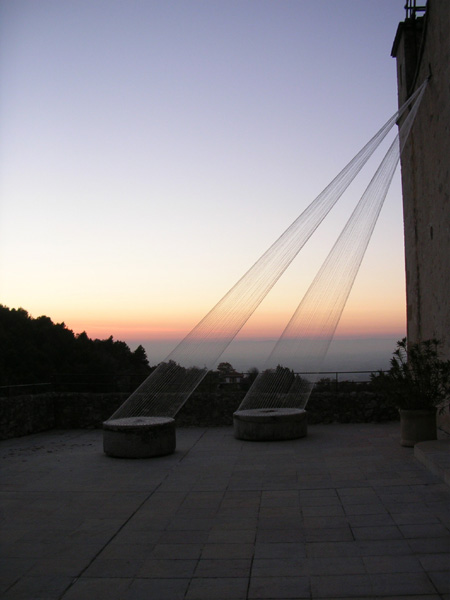 campane tuttora funzionanti. Un interruttore crepuscolare comanda l’illuminazione interna di questi vani e alimenta l’impianto di amplificazione audio.
Listen to a fragment
Listen to a fragment
Download HereListen to all
Così una tenue musica notturna proverrà dall’interno della chiesa nelle ore notturne: frammenti di repertorio sacro (Stabat Mater di Pergolesi, Ave Verum di Mozart) dilatati nel tempo, ripetuti e trattati elettronicamente contrappunteranno i suoni lontani di campane virtuali (sintetizzate con Genesis dell’Acroe) che scandiscono un tempo altro, asimmetrico, lento e irregolare.
Arpe: muri dritti e storti
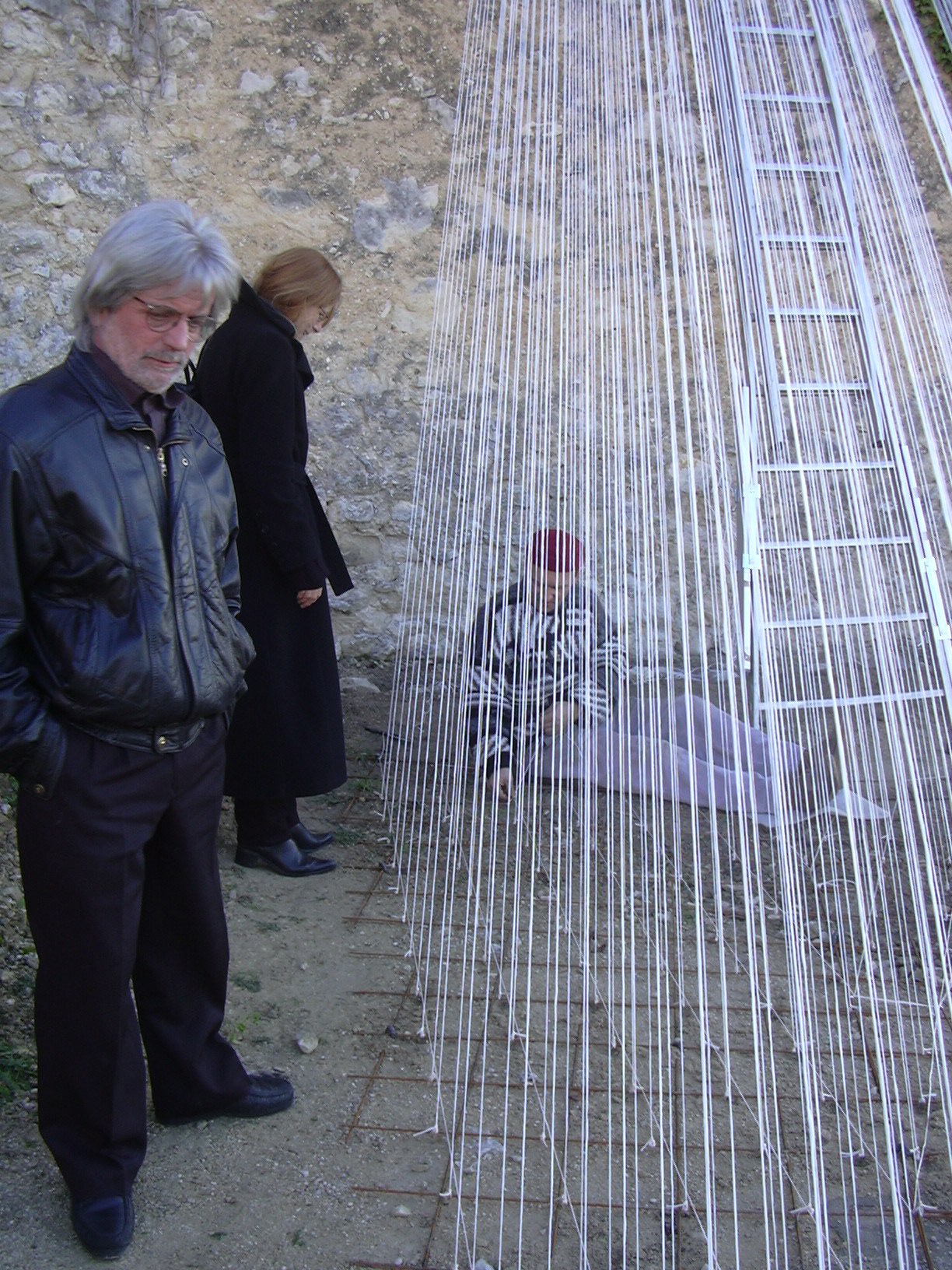
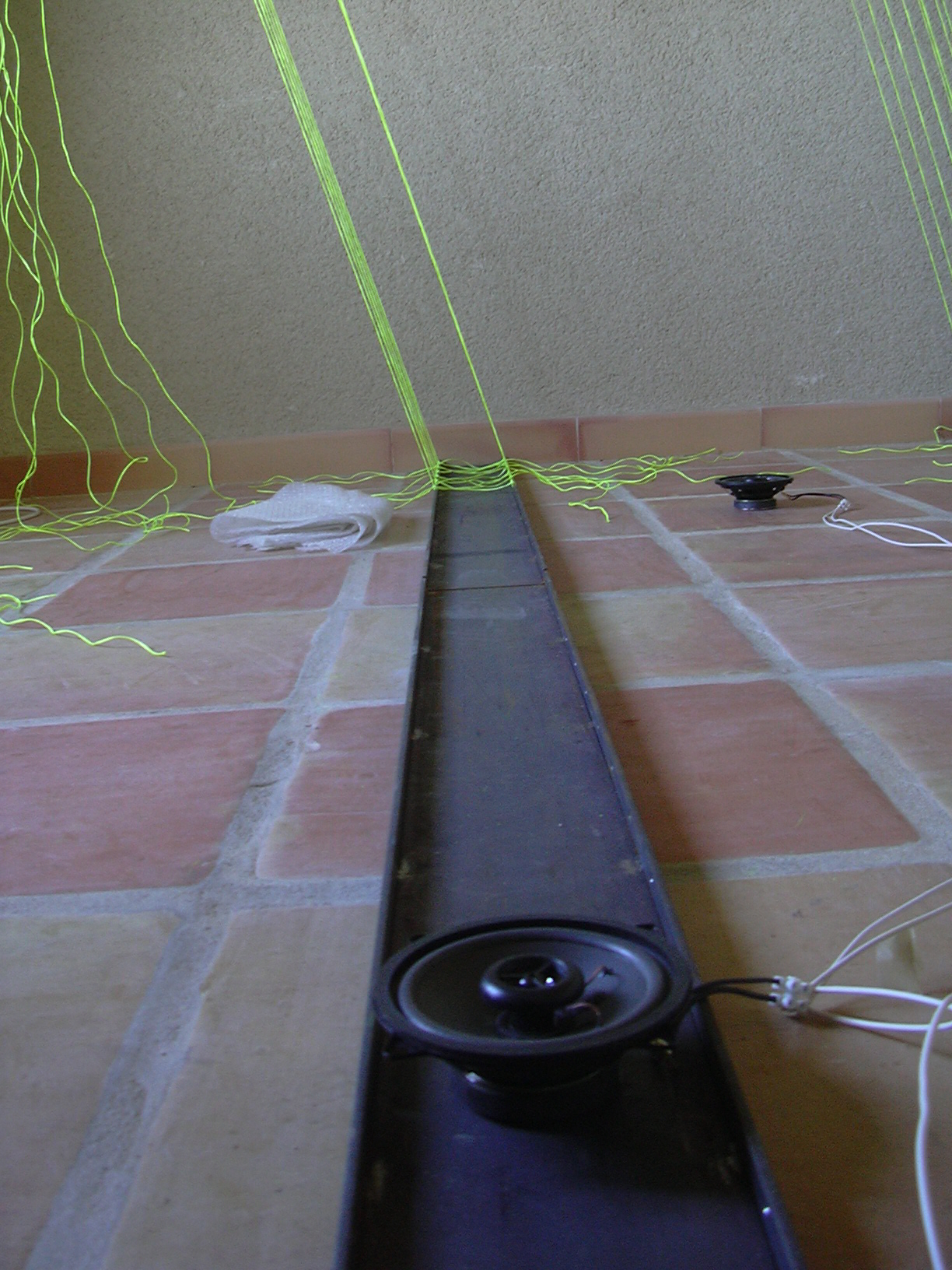
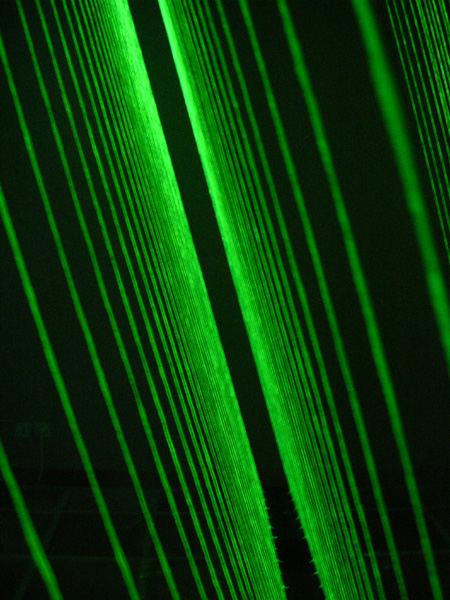 I fili tesi in doppio ordine parallelo coerente con le travi delle stanze a costruire i muri aerei di Pfeiffer non possono non evocare arpe. In due stanze contigue sono stati messe queste arpe: nella prima stanza - di passaggio e illuminata dal sole - muri dritti, nella successiva stanza – cieca e buia – muri posti a seguire l’inclinazione del soffitto, quindi inclinati rispetto al pavimento, trattati per essere fluorescenti ed illuminati da luce nera (luce di Wood).
Ascolta un frammento/Listen to a fragment
Ascolta tutto/Listen to all
Download Here
Altoparlanti posti a vista tra i fili del muro-arpa, diffondono suoni registrati naturali di arpa; gli stessi suoni, sincroni ma variamente m odificati e deformati elettronicamente, sono diffusi nella stanza buia. La sensazione congiunta della deformazione dei suoni e dell’inclinazione apparente del pavimento è fortemente destabilizzante.
Steps
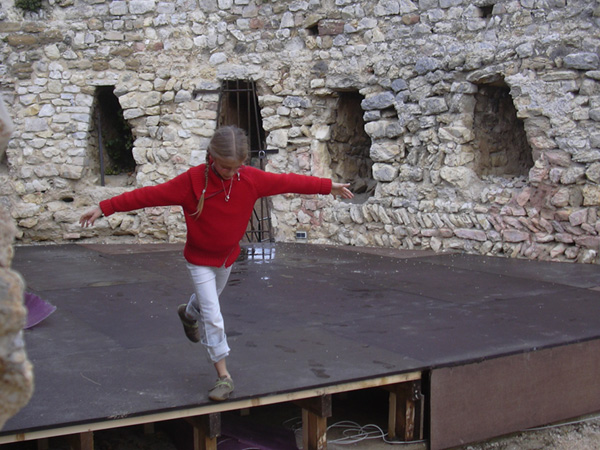 Il palco del piccolo teatro all’aperto è usato spesso per spettacoli di danza: quando visitai la prima volta vi erano le prove per il saggio di una scuola di danza. Con due microfoni posti sotto l’impiantito del palco ho registrato il suono di passi di danza; ho poi fissato una coppia di grossi altoparlanti sotto l’impiantito stesso a diffondere quegli stessi suoni. Chi si avvicinava alla galleria, posta proprio di fianco al palco, richiamato dal suono di passi ritmati, si sporge a cercare di vedere chi danzava, ma i danzatori sono scomparsi, di loro rimane solo la memoria sonora.
Ascolta un frammento
Download Here
Wagner: Dannato sia, Ansietà d’Isolda
Il ciclo “Opera Chiusa”, progettato e realizzato a quattro mani, quattro occhi e quattro orecchie con Johannes Pfeiffer, parte da vecchi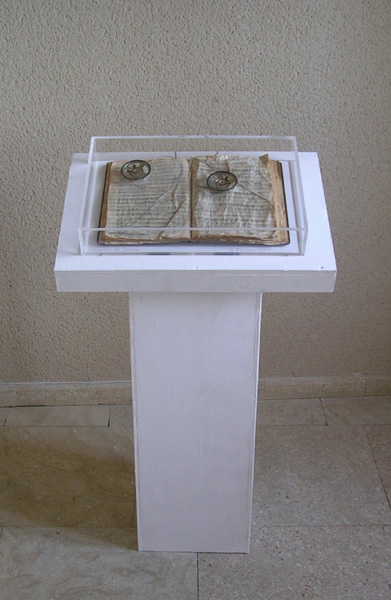 spartiti canto e pianoforte di opere italiane e tedesche di repertorio; i libri sono aperti ed hanno le pagine incollate, ai pentagrammi talvolta si sovrappongono altri fogli di musica traslucidi. Si aggiunge un piccolo sistema audio, low-fi, costituito da un amplificatore integrato nel leggio, fili di rame nudo in qualche caso tesi a fasci paralleli di cinque (altri pentagrammi che portano un segnale musicale ma elettrico), fissati da colate di ceralacca rossa, che alimentano piccoli altoparlanti trasparenti.
Ascolta
Download Here Ascolta tutto/Listen all
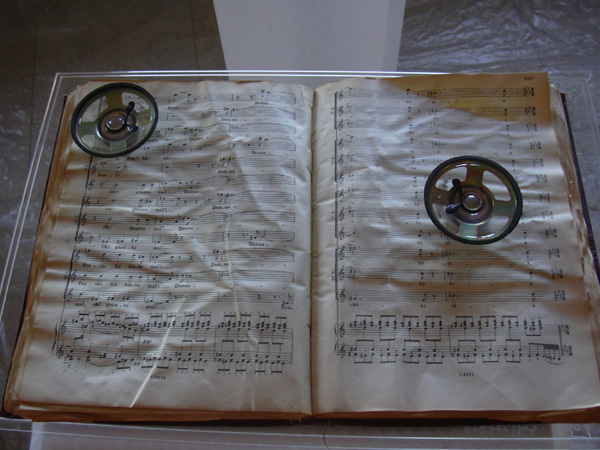 Gli spartiti sono chiusi in una teca di plexiglas e posti sopra un leggio in legno. Un sensore di prossimità avvia l’ascolto della riproduzione di una vecchia registrazione storica della stessa opera che gira in loop infinito: avvicinandosi, lo spettatore-ascoltatore darà voce amplificata ad una breve porzione d’opera casuale che risuonerà nello spazio chiuso della teca-teatro per tacere poco dopo l’allontanamento dello spettatore.
GG, 2004
English text
The musical installations of Klanglinien en soleil majeur, Hommage à W. were designed and realised in close collaboration with Johannes Pfeiffer for the specific site and occasion of the Cheminement des sculptures in Gigondas. We decided to make a coordinated musical and visual intervention in two installations: one outside (the churchyard) and one inside (the last two adjoining rooms of the gallery: Harps).
One installation (the outdoor theatre stage: Steps) was only musical, others were only visual. Finally, we presented in the large gallery room the first two works of a series of chamber sound objects (Wagner: Dannato sia, Ansietà d'Isolda) entitled Opera Chiusa.
Church: one night-long music
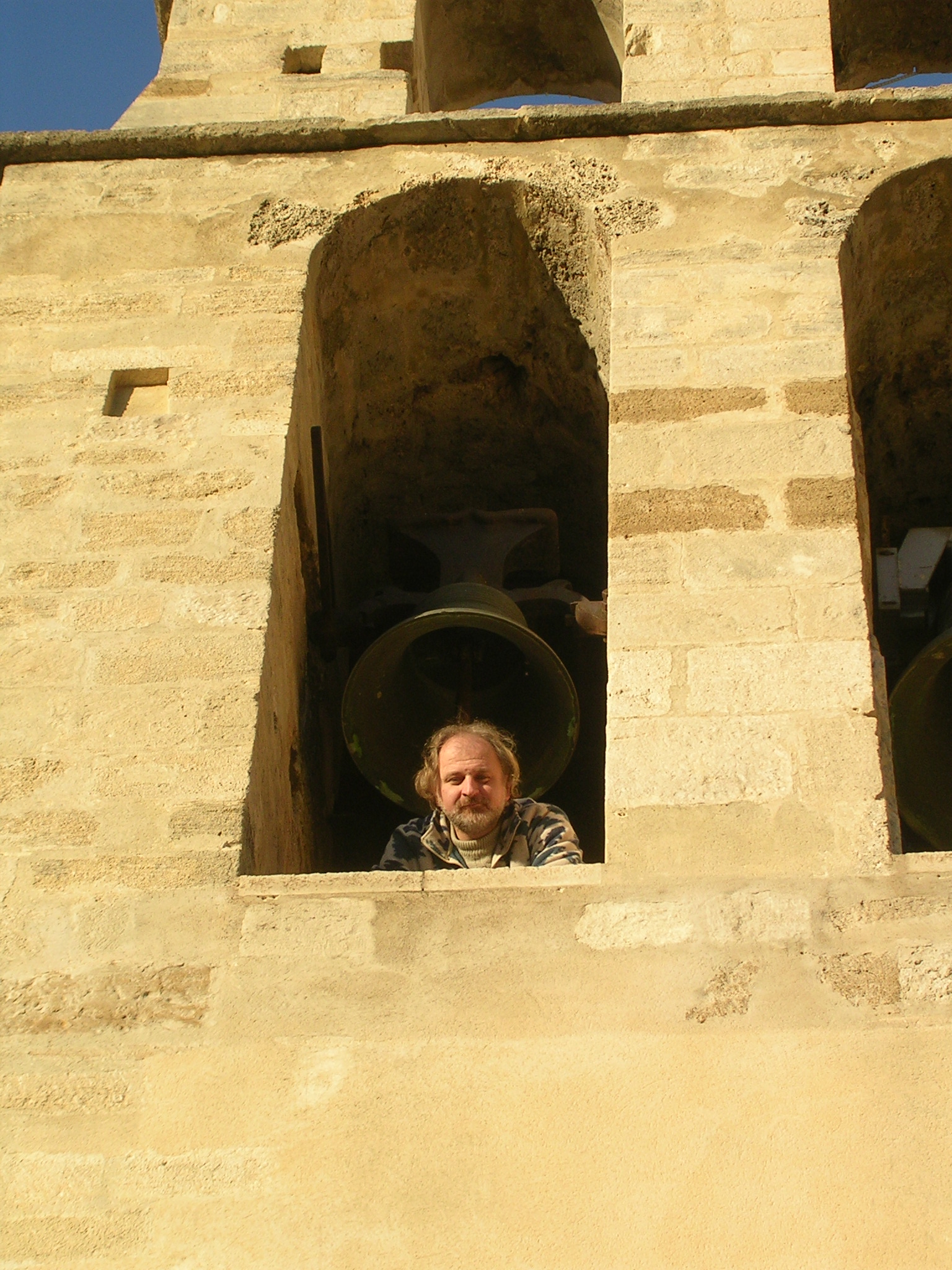
The façade of the church is dominated by arches that house a Statue of Our Lady on one level and, on the highest level, a pair of bells that are still working. A twilight switch controls the interior lighting of these compartments and powers the sound system. Thus a soft nocturnal music will emanate from inside the church at night: fragments of sacred repertoire (Pergolesi's Stabat Mater, Mozart's Ave Verum) stretched in time, repeated and electronically processed will counterpoint the distant sounds of virtual bells (synthesised with Acroe's GENESIS) that mark another time, asymmetrical, slow and irregular.
Harps: straight and crooked walls
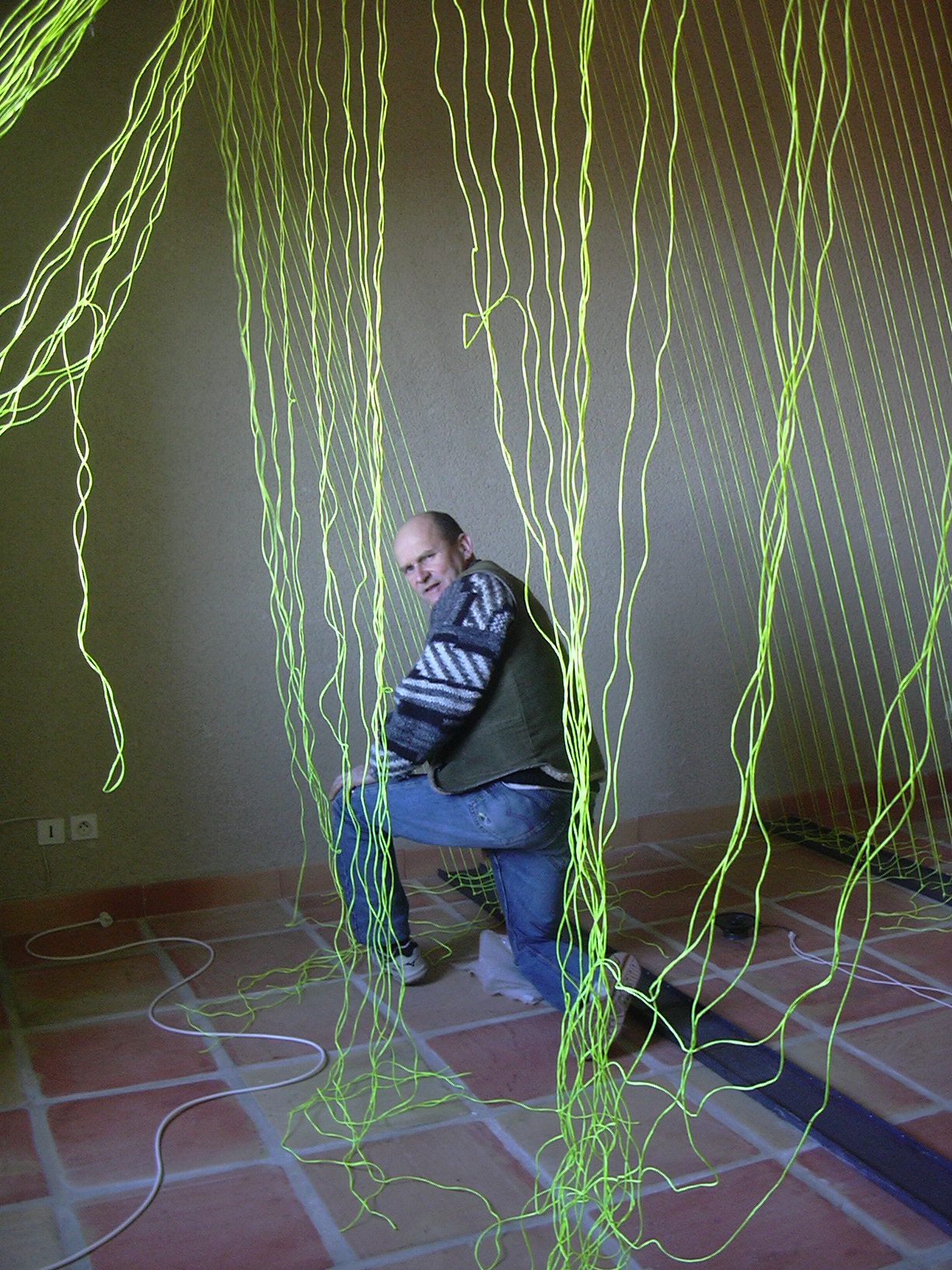
The strings stretched in double parallel order consistent with the beams of the rooms to build Pfeiffer's aerial walls cannot fail to evoke harps. In two adjoining rooms these "harps" have been placed: in the first room - passing through and lit by the sun - straight walls, in the next room - blind and dark - walls placed to follow the inclination of the ceiling, thus inclined to the floor, treated to be fluorescent and lit by black light (Wood's light). Loudspeakers placed between the wires of the harp-wall, diffuse recorded harp sounds; the same sounds, synchronous but variously electronically modified and deformed, are diffused in the darkened room. The combined sensation of the deformation of the sounds and the apparent tilt of the floor is highly destabilising.
Steps
The stage of the small open-air theatre is often used for dance performances: when I first visited there were rehearsals for a dance school's recital. With two microphones placed under the stage rig, I recorded the sound of dance steps; I then fixed a pair of large loudspeakers under the rig itself to broadcast those same sounds. Those approaching the gallery, located right next to the stage, attracted by the sound of rhythmic steps, lean out to try to see who was dancing, but the dancers have disappeared, and only the sound memory of them remains.
Wagner: Dannato sia, Ansietà d'Isolda mixed6 4
The 'Opera Chiusa' cycle, designed and realised by four hands, four eyes and four ears with Johannes Pfeiffer, starts with vecchimixed6 4 sheet music for voice and piano of Italian and German repertoire operas; the books are open and have the pages glued together, the staves
are sometimes overlaid with other translucent sheets of music. A small, low-fi sound system is added, consisting of an amplifier built into the music stand, bare copper wires in some cases stretched in parallel bundles of five (other staves carrying a musical but electrical signal),
fixed by red wax castings, which feed small transparent loudspeakers.
The music scores are enclosed in a Plexiglas case and placed on a wooden music stand. A proximity sensor starts listening to the playback of an old historical recording of the same work that spins in an infinite loop: as the spectator-listener approaches, he/she will give amplified voice to a short random portion of the work that will resonate in the closed space of the theca-theatre, to fall silent shortly after the spectator leaves.
GG, 2004